Updates

Wallet-Native Authentication Protocol documentation draft

This post is overdue. The Catalyst Fund 11 project Crypto wallets for signup, login, and 2FA got approved starting the second quarter of 2024, and Milestone 1 — the technical specification — should have landed long before now. Life intervened and the work sat unfinished. I would rather deliver it late and right than on time and shallow, so here it is. What the document covers Most current Cardano login implementations sign a bare random nonce. It works, but it is opaque to the user, carries no information about which site requested it, and leaves a thin audit trail on the server. I set out to specify something better: a structured, human-readable payload that binds the signature to a domain, a server-committed action, and a timestamp — built on top of what CIP-8, CIP-30, and the stalled CIP-93 proposal already got right.

By —
| 2 min read

Updates to transaction editor

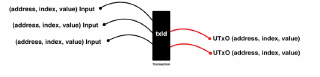
The transaction editor needed an update. It experienced troubles with transactions in your wallet from the Conway era. Although that network upgrade took place a while ago, it didn’t really manifest any problems for some time. Truth is, we all take time to upgrade. I updated the serialization library that creates the transactions as well as added support for the Lace wallet IOHK’s in house web wallet. I didn’t do that earlier because they had errors with the error notifications from wallet to app and their token mint display was off. Now that the one error got fixed and the other became irrelevant as the wallet does not display anymore about the token mints, you just find them, I added the Lace wallet support.

By —
| 1 min read

Collaborative transactions

It is finally possible. The transaction editor webapp has now a backend to synchronize with connected clients. That means you can have multiple wallets connected into a transaction and collaboratively create a transaction that merges/swaps funds between the wallets and all wallets must sign for the transaction to be valid. As always, I accompany every feature release with a video. A tutorial that shows you every step of the process for you to learn how to do it yourself. The tutorial available on the Ars magna YouTube channel and here in immediate display. Let’s get started!

By —
| 2 min read

Hardware wallet support on the transaction editor

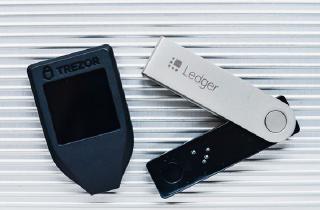
Up until now the transaction editor supercharged the cardano-cli, allowing you to craft highly complex transactions in a declarative manner, and it was amazing! However, key management is out of scope from the CLI an consequentially was from the editor. That started to change 6 months ago with the introduction of state management , upgrading the editor into a wallet and making it more useful. Now it is better than ever before with the support for hardware devices.

By —
| 2 min read

Transaction editor webapp now supports Token mint & burn

This is the second major update on the app, now it is possible to mint Mary Era Cardano Native Tokens. That means by directly letting your wallet construct the minting policy, you can now use the editor to mint or burn your tokens. The UX starts to feel bloated, despite the minimalist design. There is no way around the fact that transactions on the Cardano blockchain can be feature rich. I know that general UX design principles say to use modals for specific features. However, I decided to stick with an interface, which has all inputs on the same page. It might feel bloated, it might be wrong UX, yet the nice thing about being part of the competition is that I get to propose my version of the solution and carve my place in the market.

By —
| 2 min read

Releasing MVP transaction editor webapp

Certainly, this project has taken way too long for delivery. I had to reconsider its design many times. It went from an ambitious self-sovereign goal of hosting all infrastructure to leveraging your current web wallet for all your interactions with the blockchain. Today with many wallet options, it seems a better choice and I can focus on my particular goal. TL;DR: The editor is finally out, it has still many rough edges but you can try it with your favorite wallet. Find the link in this post or from the project page.

By —
| 7 min read

Releasing documentation ouroboros-network local state query

Ever wondered how to communicate directly to your Cardano node? Where you bound to the cardano-cli? Did you wrap it around your preferred language? Now I have a new way. Talk directly to the node. The node follows a network specification on how it communicates to other nodes and clients. You can implement that specification and talk directly to the node. I have done it, and documented the effort along the process. Now on this website there is a new tab Education where I store documents about dealing with Cardano. Starting today, it includes the Ouroboros-network: Local State Query mini-protocol documentation .

By —
| 1 min read